
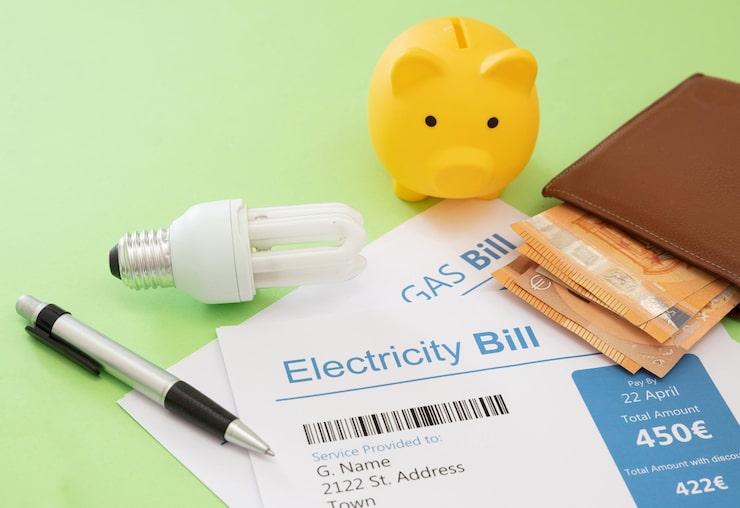
Australia consistently ranks among the countries with the highest residential electricity prices in the world. For many households, power bills have become one of the most significant and stressful items in the monthly budget. Understanding why electricity bills so much in Australia, and what you can realistically do about it, is essential knowledge for any household trying to manage its finances in today’s high cost-of-living environment.
Why Australian Electricity Prices Are So High
There is no single reason why Australians pay so much for electricity. Rather, it is the result of several interconnected factors that have developed over decades and continue to shape the market today.
One of the most significant contributors is the cost of the electricity network itself. Australia is a vast country with a dispersed population, and delivering electricity reliably across enormous distances requires an extensive and expensive infrastructure of poles, wires, and substations. Network charges, which cover the cost of building and maintaining this infrastructure, make up a substantial portion of every electricity bill. These costs are regulated by the Australian Energy Regulator and are passed on directly to consumers regardless of how much power they actually use.
Wholesale electricity prices are another major driver. Australia’s National Electricity Market, which covers Queensland, New South Wales, Victoria, South Australia, Tasmania, and the ACT, is subject to significant price volatility. The ageing coal-fired power stations that once provided cheap baseload power have been closing or reducing output, while the transition to renewable energy sources such as wind and solar has introduced new complexities around supply reliability. During periods of high demand, such as extreme summer heat waves, wholesale prices can spike dramatically, and these spikes are eventually reflected in retail rates.
Environmental policy levies and green energy schemes also add to the retail price. Programs such as the Renewable Energy Target have added costs to electricity bills over the years, though these schemes also fund investment in the renewable infrastructure that will eventually reduce long-term costs. State-based feed-in tariff schemes and energy concession programs are also funded through broader pricing structures.
Finally, retail margins and competition play a role. Australia has a deregulated retail electricity market in most states, meaning households can choose their provider and plan. However, retailers add their own margins on top of network and wholesale costs, and many consumers remain on uncompetitive default plans simply because they have never switched or compared alternatives.
The Biggest Electricity Users in Your Home
Before you can effectively reduce your electricity bill, it helps to understand where power is actually being consumed. Heating and cooling systems are by far the largest energy users in most Australian homes, accounting for roughly 40 percent of total household energy consumption. Hot water systems are the second largest consumer, followed by refrigerators, washing machines, dryers, ovens, and lighting.
Many households also have significant energy waste from standby power, which is the electricity consumed by appliances that are switched off but remain plugged in. While each individual device consumes only a small amount in standby mode, across a whole household with dozens of plugged-in devices, standby waste can add up to a meaningful portion of the annual bill.
Practical Ways to Reduce Your Electricity Bill
The good news is that there are numerous practical strategies available to Australian households that can deliver genuine and lasting reductions in electricity costs.
Switching energy plans is one of the fastest and highest-impact actions you can take. The Australian Energy Regulator’s Energy Made Easy comparison website allows consumers to compare all available plans in their area based on their actual usage patterns. Many households that have never switched providers or reviewed their plan in several years find they are paying significantly more than the market’s best available offer. Simply switching to a better plan can reduce annual electricity costs by hundreds of dollars.
Optimising your heating and cooling habits offers significant savings. Setting air conditioners to 24 to 26 degrees Celsius in summer and 18 to 20 degrees Celsius in winter rather than more extreme temperatures can reduce heating and cooling costs substantially. Every degree of difference adds approximately ten percent to the energy used by your system. Ceiling fans use a fraction of the power of air conditioners and can keep rooms comfortable without heavy energy use during milder periods.
Upgrading to a solar power system remains one of the most effective long-term strategies for Australian homeowners. Australia has some of the highest solar installation rates per capita in the world, driven by excellent sunlight resources across most of the continent and government rebates available under the Small-scale Renewable Energy Scheme. A well-sized solar system can eliminate a significant portion of a household’s grid electricity consumption, and pairing it with a battery storage system allows households to use solar-generated power even at night.
Government Rebates and Concessions
Many Australian households are entitled to energy bill concessions or rebates that they are not claiming. Pensioners, healthcare card holders, and low-income families are eligible for energy concession programs in every state and territory. Following the energy price increases of 2022 and 2023, both the federal government and various state governments have also introduced targeted energy bill relief payments to help households manage the financial pressure. Checking your eligibility through your state’s energy department or concession authority is a simple step that costs nothing and can make a genuine difference.
State governments also offer rebates for specific efficiency upgrades including solar hot water systems, heat pump hot water, home insulation, and efficient appliances. These programs change regularly, so checking the current offerings from your state’s energy regulator or environment department is worthwhile before making any upgrade decisions.