
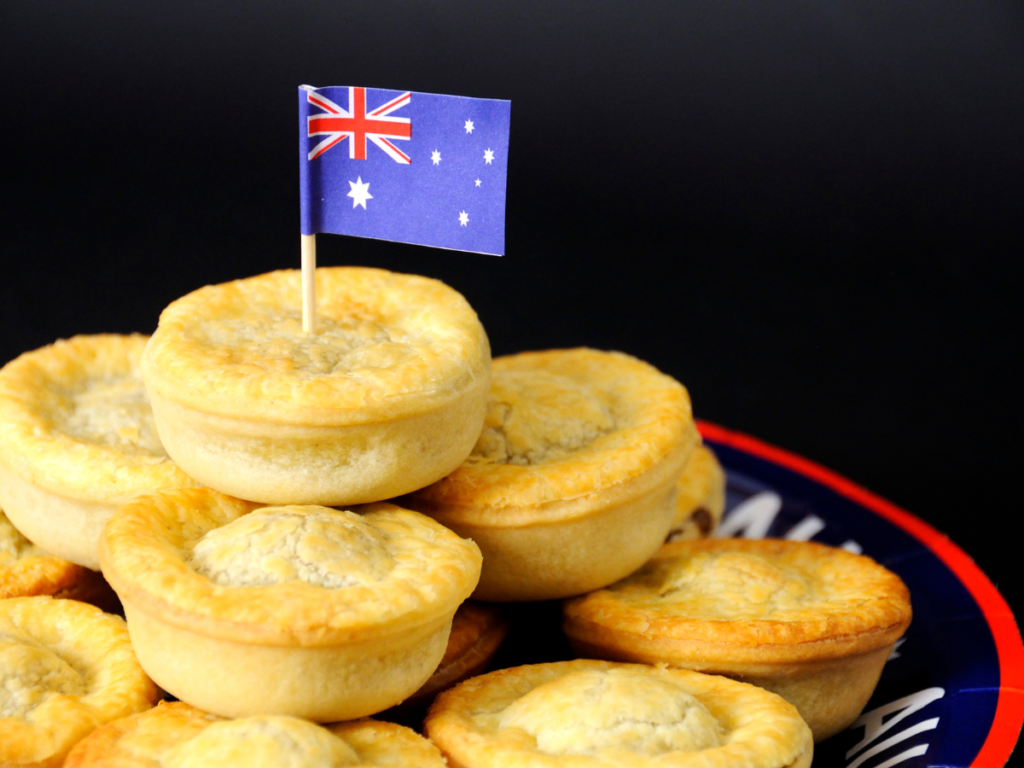
Australia’s traditional food culture is a mix of British‑style dishes, Indigenous bush tucker, and home‑grown favourites that have become national icons. When people ask what Australians eat every day, they usually hear about things like meat pies, Vegemite, barbecue, and biscuits that feel more uniquely Australian than anything else. Understanding these foods is a great way to get to know the country beyond the landmarks.
Meat pie: the unofficial national dish
The meat pie is widely regarded as the most popular traditional food in Australia. A small, hand‑held pie filled with minced meat and gravy in a flaky crust, it is served in cafes, bakeries, sports grounds, and convenience stores across the country. Many Australians eat a meat pie with tomato sauce for a quick, comforting meal or snack.
Over time, the meat pie has become more than just food; it is a cultural symbol of Australian comfort eating. Whether you are at the beach, at a football match, or on a road trip, a hot meat pie wrapped in paper is a classic Australian experience that shows how British‑style pies have been fully embraced by local life.
Vegemite and toast culture
Vegemite is one of the most famous Australian foods worldwide, even if its strong, salty taste is not for everyone. Made from yeast extract, this dark brown spread is usually eaten on thin toast with a small dab of butter or margarine. For many Australians, Vegemite and toast is a childhood breakfast or snack that feels instantly familiar.
Beyond its taste, Vegemite represents a uniquely Australian food tradition that grew from wartime shortages and local innovation. Today it appears in sandwiches, on crackers, and even in recipes, showing how this simple spread became a key part of the country’s food identity.
Anzac biscuits and wartime flavours
Anzac biscuits are another traditional food that carries a strong cultural story. These crunchy oat and coconut biscuits were first made by women sending food to soldiers during World War I, using ingredients that kept well on long sea journeys. The simple, long‑lasting recipe has remained almost unchanged.
Nowadays, Anzac biscuits are eaten year‑round in homes and cafes, but they are especially associated with Anzac Day ceremonies and school events. Their taste is sweet and slightly nutty, and their history connects modern Australians with generations past through food.
Pavlova and the sweet tradition
Pavlova is one of Australia’s most loved desserts and a key part of the country’s traditional food list. This light meringue‑based cake is topped with whipped cream and fresh fruit such as kiwifruit, strawberries, and passionfruit. It often appears at family gatherings, barbecues, and celebrations, especially in summer.
Although there is a friendly rivalry with New Zealand over who invented pavlova, the dessert is firmly part of Australian food culture. Its sweet, airy texture and colourful topping make it a favourite for people who want something light but festive on the table.
Barbecue and outdoor eating
Barbecue is one of the most popular traditional ways to eat in Australia. Instead of thinking of it as a special event, many families host backyard barbecues regularly, grilling meat, sausages, and seafood on hot plates or charcoal grills. The smell of sizzling lamb chops, chicken, and sausages is a familiar part of Australian weekends.
Barbecue also reflects the country’s love of outdoor life and casual entertaining. Friends and family gather around the grill, often with simple sides like salad, bread, and sauces. For many Australians, a good barbecue is not just about food; it is about relaxed social time and community.
Fish and chips and coastal classics
Along the coast, fish and chips is a classic traditional food that many Australians grew up with. Fresh white fish is battered and fried, then served with hot chips, often wrapped in paper and eaten by the beach. This simple, salty, greasy meal has become a seaside tradition.
Other coastal favourites include grilled seafood, prawns, and oysters, especially in areas known for rich fishing grounds. These dishes are tied to Australia’s long coastline and the way many communities rely on the sea for food.
Bush tucker and Indigenous food
Another important part of Australia’s traditional food culture is Indigenous bush tucker. For tens of thousands of years, Aboriginal people have eaten kangaroo, emu, native herbs, and plants such as wattleseed, lemon myrtle, and finger lime. These ingredients are increasingly used in modern Australian restaurants and by visitors to Aboriginal cultural experiences.
Bush tucker is not just “old food”; it is a living tradition that connects Indigenous communities to land and history. When Australians talk about the most popular traditional foods in Australia, more people are now including Indigenous ingredients as a core part of the nation’s food story.
Iconic biscuits, snacks, and breakfasts
Beyond the main dishes, many Australians also think of biscuits, snacks, and breakfast items as traditional foods. Lamingtons, Tim Tams, Anzac biscuits, and Iced Vovos are common in homes and at community events. These treats are often shared at school fairs, parties, and work morning teas.
Breakfast culture includes simple classics like bacon and eggs in a roll, Vegemite toast, and cereal with milk. These everyday foods show how Australian food traditions are a mix of British roots, local ingredients, and the habits of a largely coastal, outdoor‑oriented population.
When people ask about the most popular traditional foods in Australia, they are really asking about the dishes that feel uniquely Australian in flavour, history, and everyday use. From the meat pie to the barbecue to Vegemite toast, these foods give a tasty snapshot of how Australians eat and live.